Users don't blame the model. They blame you.
Most AI teams obsess over output quality while users abandon during the wait. The 30 seconds between click and result is the highest-stakes UX surface in your product — and nobody designed it.
Most AI teams are still optimizing for the wrong thing.
They obsess over output quality, hallucination rates, latency benchmarks, and model comparisons on evals that have nothing to do with how users actually experience their product.
Meanwhile, users abandon the product during the thing nobody designed for: the wait.
The 30 seconds between clicking "go" and getting a result is the highest-stakes UX surface in an agentic product. It's when users decide whether this system is trustworthy, working, or broken. Most products fill that moment with a spinner and silence.
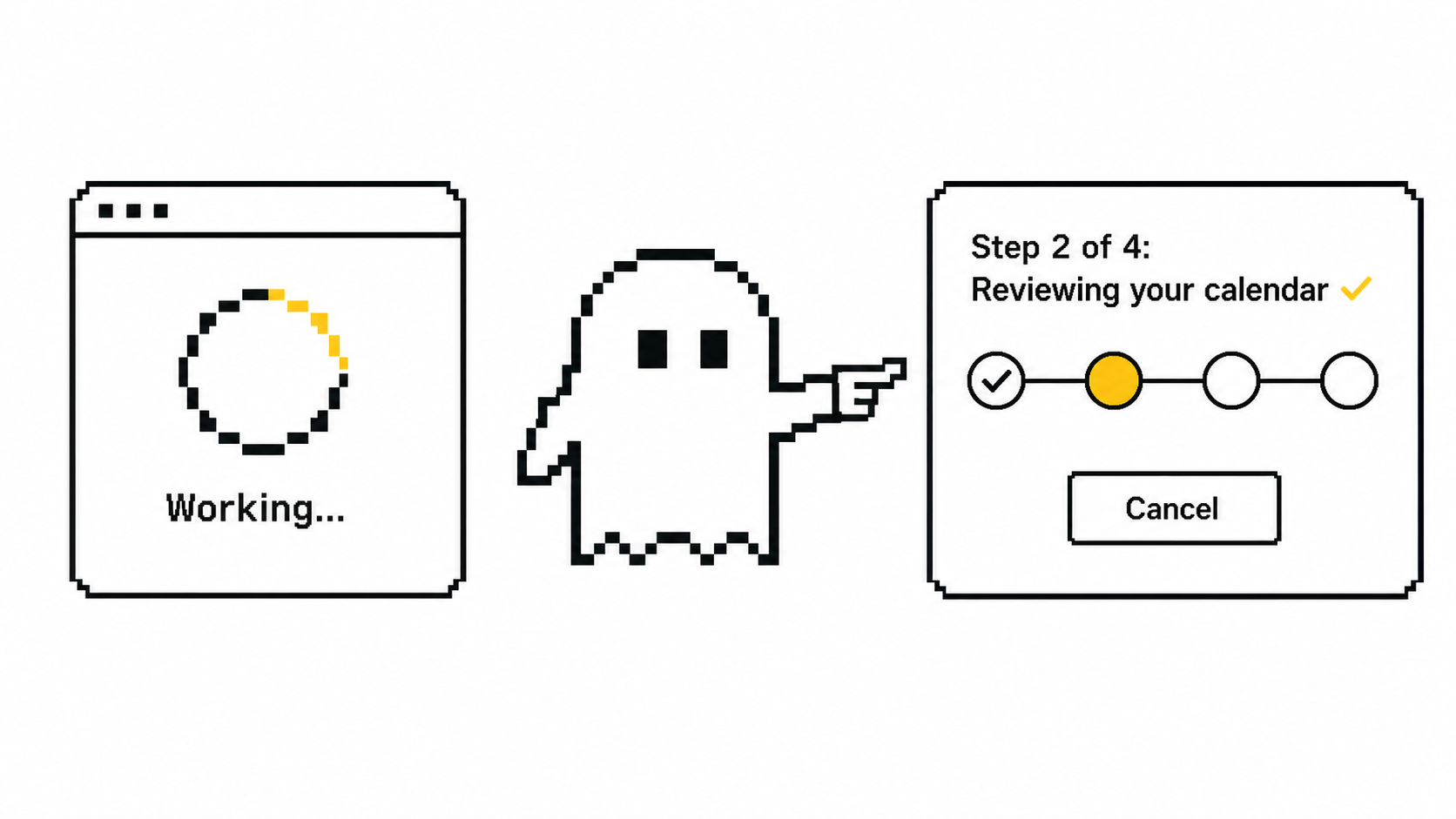
Research on AI transparency is unambiguous. When users can see what a system is doing, trust ratings climb from 7.3 to 8.8 out of 10 compared to black-box systems delivering identical outputs. Same answer, different visibility, different trust. Trust is the thing that determines whether a user comes back.
The problem isn't that AI teams don't care about UX. They don't have a mental model for what UX means during inference. The app state that traditional UI/UX covers — empty states, loading states, error states — maps awkwardly to an agent that's making decisions, calling tools, retrieving data, writing, editing, and outputting over 30 to 90 seconds. Nobody told the designer what to show.
So they show nothing, or a spinner, or a generic "thinking..." message that fails to distinguish "the agent is planning" from "the agent is stuck" from "the model API is down."
What users actually need during that wait isn't entertainment. It's evidence. Evidence that something is happening, that it's the right thing, and that they can intervene if needed.
The best agentic interfaces do three things:
Name the current step, specifically. "Pulling your calendar" is better than "Loading." "Reviewing the draft for tone" is better than "Working." Specificity signals intentionality — that the system is doing something deliberate, not just spinning. It's also an implicit contract: if the step is named, users can hold the product accountable when it fails.
Show intermediate results before the final answer. Don't wait until it's all done. Surface partial outputs: a retrieved source, a decision logged, a step marked complete. Users who see the work being done are dramatically more tolerant of latency — and dramatically more likely to trust the final output.
Make the wait something the user can interrupt. A cancel button isn't a failure state. It's a trust signal. It says the user is in control. In usability research, interfaces that allow interruption during processing consistently score higher on trust and perceived competence — even when users never actually use the cancel button.
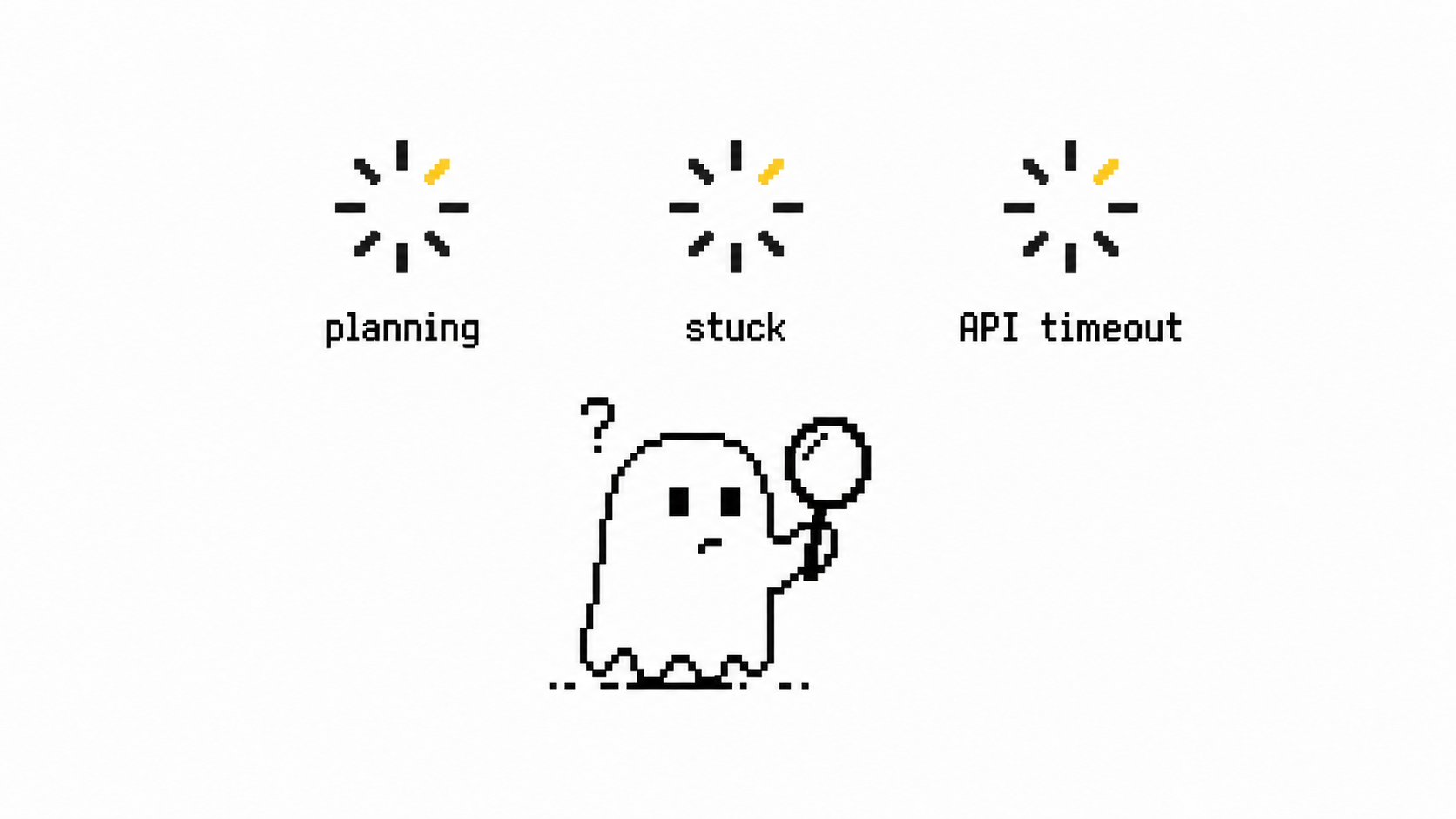
The failure mode isn't that the model gave a bad answer. It's that the product gave users no basis for deciding whether to trust the answer they got. Latency anxiety — the uncertainty about whether anything is happening — collapses into abandonment. Not because users think the model is bad, but because they don't know what the model is doing, and nobody designed that part.
This is fixable, not with a better model, but with a better interface spec.
Audit your own product. Open your agentic feature and time how long the wait is. Now ask: does the interface give users any signal about what's happening, step by step? Can they interrupt? Do they know why the output looks the way it does? If the answer to any of those is no, your abandonment problem isn't your model — it's the thirty seconds before the output that you left completely blank.
Sources
- UI/UX & Human-AI Interaction — Agentic Design Patterns
- Agent UX: UI Design for AI Agents in 2026 — Fuselab Creative
- 4 UX Design Principles for Autonomous Multi-Agent AI Systems — Victor Dibia
- The key role of design and transparency in enhancing trust in AI-powered digital agents — ScienceDirect
- Designing for Trust: Escaping the Black Box in the Age of AI — Medium